Arduino firmware & electronics
DTU Design Build 3

Solar-Powered Buoy
A team-built autonomous buoy prototype, with my focus on Arduino firmware and electronics for a solar-powered environmental-monitoring system.
Scroll to inspect the full diagram →
Solar input / battery / controller / sensingArchitecture abstraction
The problem
Build a self-powered environmental-monitoring buoy that can operate in water while balancing available solar energy, storage, and the electronics load.
System architecture
- A six-person design-build effort combining a 3D-printed buoy prototype, a solar PV–battery power system, electronics, and Arduino control code.
- My contribution centred on the Arduino firmware and electronic integration within the prototype.
- The course design process included numerical modelling and energy simulations to size and assess the buoy system.
Engineering decisions
- Coordinate firmware and electronics as part of the physical power and sensing system, rather than treating code as a standalone deliverable.
- Keep the prototype's energy budget and in-water operation central to design discussions.
Testing and verification
- The course required a functional prototype to be tested in a realistic or simulated environment.
- Its evaluation framework compares energy measurements and environmental performance with model predictions; project-specific results have not been supplied here.
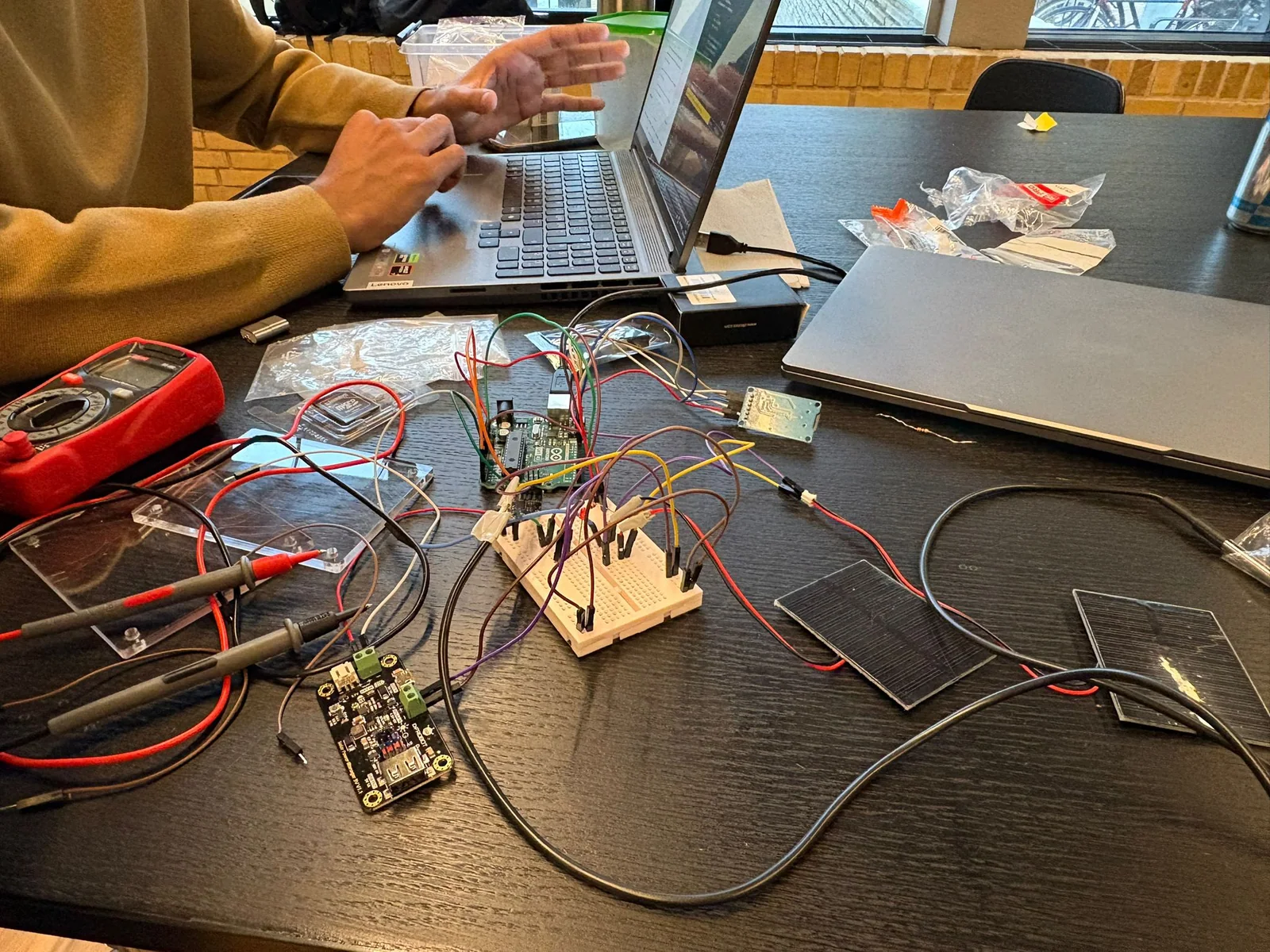
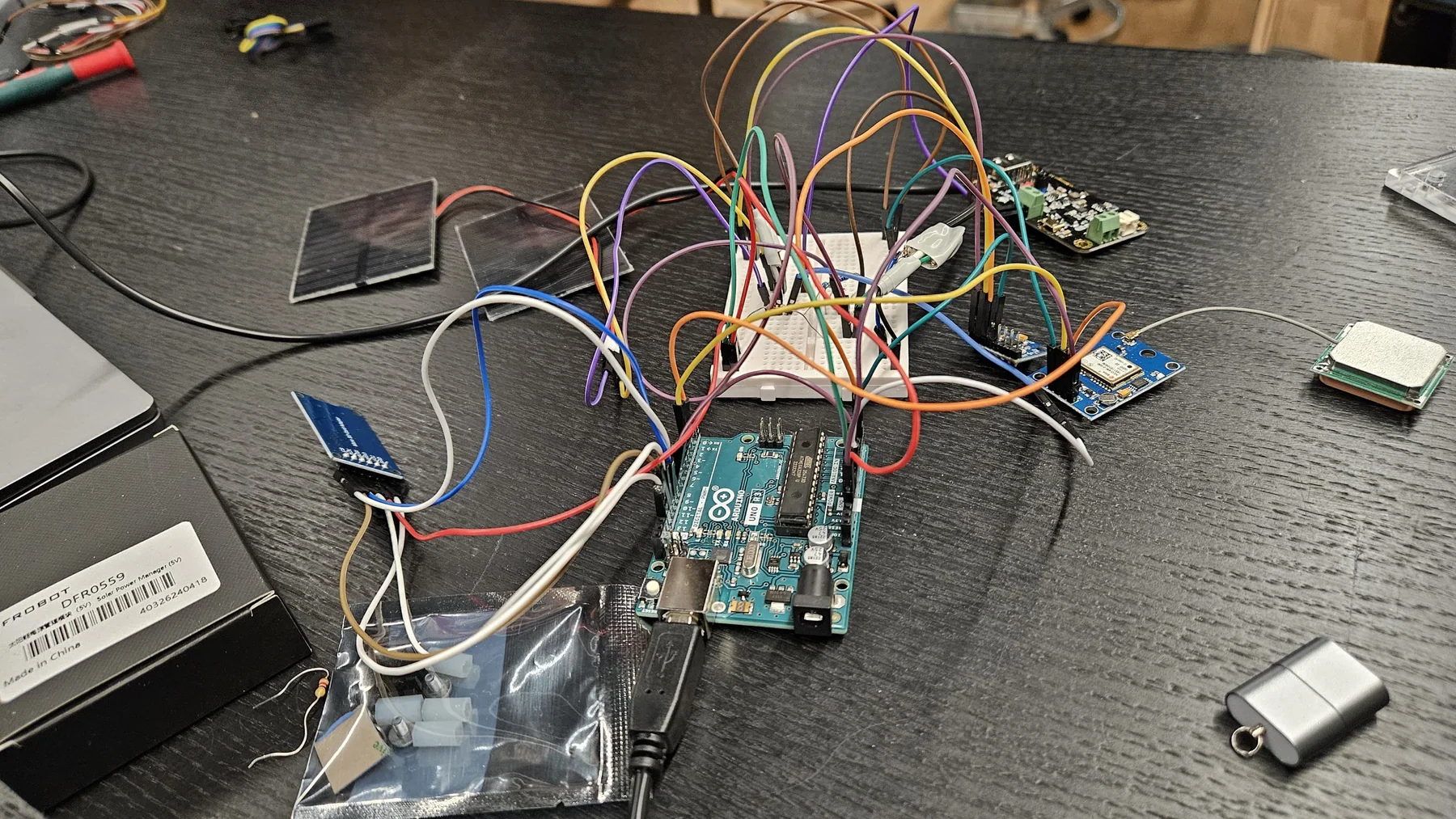
From build to bench
Limitations
- A course prototype, not a deployed ocean-monitoring installation.
- No specific sensor readings, autonomy duration, or measured performance figures are published here.
What I would improve next
- Document the firmware-to-electronics interfaces and repeatable bench tests.
- Compare measured power use with the energy model over longer operating periods.